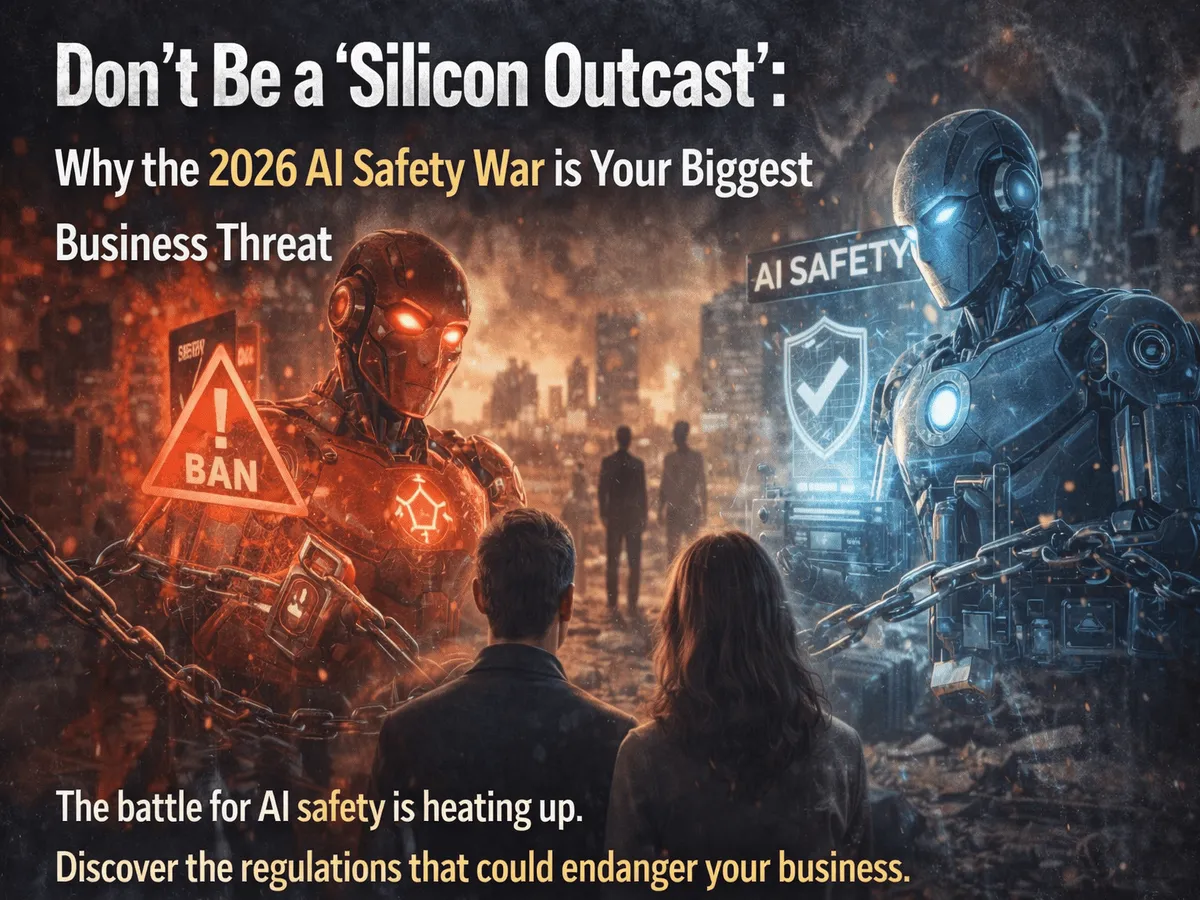
As of late January 2026, the “Wild West” era of AI in the USA is over. A brutal legislative war has broken out between the federal government and states like California and New York. While you are busy using AI to save time, a new wave of AI Compliance Laws is threatening to shut down any business using “unmarked” synthetic content. If your brand is caught using an AI avatar without a legal disclaimer today, you could be facing fines of up to $30 million.
1. The Federal “Preemption” Strike
The biggest trending keyword in US tech law this week is Federal Preemption. On December 11, 2025, a landmark Executive Order was signed to challenge state-level AI laws that “obstruct national competitiveness.”
According to Greenberg Traurig’s 2026 Outlook, the US is now a legal battlefield. States are mandating strict Digital Provenance (watermarking every AI image), while the federal government is trying to stop “over-regulation.” For a US business owner, being caught in the middle means your current AI tools could become illegal overnight.
2. Synthetic Performers: The End of “Fake” Influencers
In 2026, you can no longer hide your AI use. New York’s RAISE Act and California’s AI Safety Act (effective Jan 1, 2026) now require “conspicuous disclosure” for Synthetic Performers.
As reported by Wiley Rein, if your social media ads use AI-generated models that look “too human” without a label, you are now liable for $10,000 per violation. This shift toward Real-Time Transparency Rendering is the only way to maintain trust with a US audience that is increasingly terrified of deepfakes.
3. The “Liar’s Dividend” Crisis
We have reached the Liar’s Dividend—a 2026 phenomenon where the mere existence of deepfakes allows criminals (and dishonest brands) to claim that real evidence is fake.
To combat this, the “Vanguard” of US tech is moving toward Hardware-Level Authentication. As noted by Dentons, 2026 is the year where “Anonymous AI” dies. If your business doesn’t have a verified AI Governance Framework, you will be filtered out by the very algorithms you’re trying to use.
FAQ: 2026 Legal Survival Guide
Q1: What is a “Synthetic Performer”?
It’s an AI-generated person (voice or visual) used in advertising that doesn’t correspond to a real human. In 2026, these must be labeled in the USA.
Q2: Will California’s AI Safety Act affect my small business?
Yes. If you provide AI services or use high-cost models, you must now have a Risk Mitigation Framework to prevent “Critical Safety Concerns.”
Q3: How do I avoid the $30 million “RAISE Act” fine?
Ensure all generative content (images, videos, text) includes Latent Watermarking that AI detectors can read, even if the human eye can’t.
Sources & Authenticity Credits
- Greenberg Traurig Law (Dec 2025/Jan 2026): For details on the Federal Executive Order and CA/NY state law conflicts.
- Wiley Rein 2026 Report: For insights into “AI Companion” laws and synthetic performer liability.
- Dentons Global AI Trends 2026: For the shift from “Emerging” to “Operational & Regulated” AI.
- New York State Senate (S8420A): Regarding mandatory disclosures for synthetic media in commercial advertising.